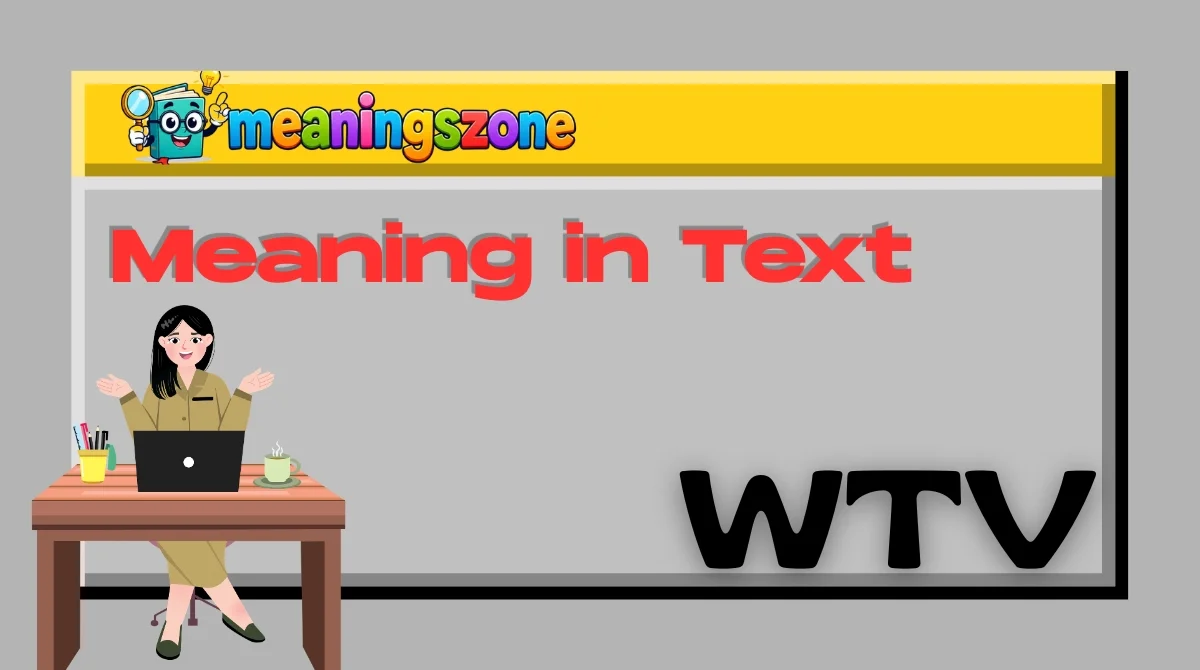
If someone sends you “WTV” in a text message, you may wonder what they are trying to say. In most online conversations, WTV means “whatever.”
It is a short and casual way to show that a person does not care much about a choice, topic, or outcome. For example, someone might text, “WTV you want is fine with me,” meaning “Whatever you want is fine with me.”
People often search for the wtv meaning in text message because texting slang can be confusing, especially when an abbreviation has different tones.
Depending on the conversation, WTV can sound relaxed, playful, annoyed, or dismissive. The words around it and the relationship between the people chatting usually reveal the intended meaning.
This guide explains WTV in simple terms, including its full form, common uses, examples, related slang, and ways to reply.
What Does WTV Mean in Text & Chat?
The basic meaning of WTV
In text messages and online chats, WTV usually means “whatever.” It is an informal abbreviation that saves time when typing.
Someone may use WTV when they mean:
- “Whatever.”
- “It doesn’t matter.”
- “Any choice is fine.”
- “I don’t really care.”
- “You decide.”
For example:
Person A: Pizza or burgers?
Person B: WTV, I’m good with either. 😄
Here, WTV sounds relaxed and means that either option is acceptable.
WTV can depend on tone
The same abbreviation can have a different feeling depending on the message.
“WTV 😂” — playful or casual
“WTV, do what you want.” — possibly annoyed
“WTV works for me.” — flexible and easygoing
So, the wtv meaning in text message is usually “whatever,” but its emotional meaning comes from context.
WTV Meaning in Text.
Full Form, Stands For & Short Meaning of WTV
What does WTV stand for?
The most common full form of WTV in texting is “whatever.” It is created by shortening the word into a few letters, making it faster to type.
WTV = Whatever
It can be used when someone does not have a strong preference or does not want to continue discussing something.
Quick meaning
For easy reference:
- WTV: Whatever
- Style: Informal texting slang
- Common use: Text messages, DMs, comments, and social media
- Tone: Depends on context
- Formal writing: Usually avoided
For example:
“WTV you choose is okay with me.”
This means:
“Whatever you choose is okay with me.”
WTV Meaning.
Origin, History & First Known Use of WTV
How WTV developed
WTV comes from the common texting habit of shortening longer words. As mobile messaging, instant messaging, and social media became popular, people began using fewer letters to communicate quickly.
Unlike some slang terms with a clearly documented creator, WTV does not have one universally recognized inventor or exact starting date. It developed naturally from informal digital communication.
Why people shorten “whatever”
The word “whatever” is already common in casual speech, so turning it into WTV makes it quick to type.
Similar patterns can be seen in abbreviations such as:
- IDK = I don’t know
- TBH = To be honest
- BTW = By the way
- NVM = Never mind
- WYD = What are you doing?
WTV belongs to this larger group of internet and texting abbreviations.
How People Use WTV in Daily Conversations
Showing no preference
One of the friendliest uses of WTV is showing that any option is acceptable.
“What movie should we watch?”
“WTV you pick 🍿”
The person is basically saying, “You can choose.”
Ending an argument
WTV can also appear when someone does not want to debate anymore.
“I still think my idea is better.”
“WTV.”
In this situation, it may sound dismissive.
Showing indifference
A person may use WTV to communicate that they are not interested in a particular outcome.
“Are you coming at 8 or 9?”
“WTV, I’ll be around.”
The meaning is close to “Either is fine.”
WTV Meaning Across WhatsApp, Instagram, TikTok & Snapchat
WTV on WhatsApp
On WhatsApp, WTV is commonly used in private chats and group conversations. Friends may use it as a quick replacement for “whatever.”
“Where do you wanna eat?”
“WTV 😅”
WTV on Instagram
On Instagram, WTV may appear in DMs, comments, or captions. The meaning remains mostly the same, although the tone can be more playful or sarcastic.
“WTV, I’m posting it anyway 😂”
WTV on TikTok
TikTok users may use WTV in comments and messages as part of casual internet language. It can express indifference, humor, or a “do what you want” attitude.
WTV on Snapchat
On Snapchat, short slang is common because conversations are usually quick and informal. WTV can simply mean “whatever” when friends are making plans or joking around.
Different Meanings of WTV in Other Fields
WTV outside texting
Although “whatever” is the main meaning of WTV in text messages, abbreviations can have different meanings in other settings.
For example, WTV may appear as a name, identifier, abbreviation, or technical shorthand in specific industries or organizations. The exact meaning depends on the field and context.
However, if you receive WTV from a friend in a text or DM, the safest interpretation is usually “whatever.”
Why context matters
Do not automatically assume every WTV you see means “whatever.” If it appears in a business document, technical discussion, school material, or professional setting, check the surrounding information before interpreting it.
Common Confusions, Mistakes & Wrong Interpretations
WTV does not always mean someone is angry
A common mistake is assuming WTV is automatically rude. It is not.
“WTV you prefer works for me.”
This sounds perfectly neutral.
But:
“WTV. I’m done talking.”
This sounds much colder.
Do not confuse WTV with similar abbreviations
Some people may confuse WTV with other short forms. The surrounding sentence usually makes the intended meaning clear.
The safest approach is to look at the whole message rather than focusing on the abbreviation alone.
Similar Terms, Alternatives & Related Slang
Other ways to say WTV
Several expressions can communicate a similar idea:
- Whatever
- Anything
- Either is fine
- I don’t mind
- Up to you
- IDC — I don’t care
- NVM — Never mind
- IDK — I don’t know
However, these are not perfect replacements in every situation.
For example, “IDK” means the person does not know, while “WTV” usually suggests that the person does not care which option is chosen.
Examples of WTV in Real Chat Situations
Friendly conversation
A: What should we order?
B: WTV you want. 😊
Meaning: “Anything you want is fine.”
Making plans
A: 6 PM or 7 PM?
B: WTV works for me.
Meaning: “Either time works.”
Slightly annoyed
A: I told you the plan already.
B: WTV.
Meaning: “Whatever.” The short reply may suggest frustration.
Playful conversation
A: I’m choosing the worst movie ever 😂
B: WTV, let’s watch it.
Meaning: “Whatever, let’s just watch it.”
How to Reply When Someone Says WTV
If WTV sounds neutral
You can simply continue the conversation.
“Okay, I’ll choose then 👍”
If WTV sounds dismissive
If you think the person is annoyed, avoid immediately becoming defensive.
“No worries. I just wanted to know what you preferred.”
If you are unsure about the meaning
You can ask directly:
“Do you mean either one is okay?”
This is especially useful when the tone is unclear.
Is WTV Still Popular? Trends & Online Usage
WTV remains useful in casual texting
WTV is still understandable in informal digital conversations because “whatever” is a common everyday expression. Short forms continue to appear in texts, DMs, comments, and group chats.
However, slang changes quickly. Some abbreviations become less common while others gain popularity through social media. WTV remains useful mainly because it is short, easy to understand, and closely connected to a familiar word.
The tone matters more than the abbreviation
Modern texting often relies on punctuation, emojis, and surrounding words to communicate emotion.
Compare:
“WTV 😂”
with:
“WTV.”
The first can feel playful. The second may feel blunt or annoyed.
That is why understanding the wtv meaning in text message requires more than simply memorizing its full form. Always consider who sent it, what was being discussed, and what happened before the message.
Frequently Asked Questions
What does WTV mean in text message?
WTV usually means “whatever.” It is a casual abbreviation commonly used in text messages, chats, DMs, and social media.
Is WTV rude?
Not necessarily. WTV can be friendly, neutral, playful, or dismissive. The tone depends on the words around it and the situation.
What does WTV mean from a girl?
If a girl texts WTV, it generally means “whatever.” It does not have a special meaning based on gender. Her tone and the conversation provide the important clues.
What does WTV mean from a guy?
If a guy sends WTV, it usually means “whatever.” Depending on the conversation, he may be saying that he does not mind, does not care, or does not want to discuss the subject further.
Is WTV the same as IDC?
They can be similar, but they are not exactly the same. WTV means “whatever,” while IDC means “I don’t care.” WTV can sound softer or more flexible depending on context.
What is the difference between WTV and NVM?
WTV means “whatever,” while NVM means “never mind.” WTV often expresses indifference, whereas NVM is commonly used to withdraw a question, request, or previous statement.
Can I use WTV in formal writing?
It is better to avoid WTV in formal emails, academic writing, reports, and professional documents. Use the complete word “whatever” or a clearer phrase instead.
Conclusion
The wtv meaning in text message is usually “whatever.” It is a short, informal abbreviation used when someone has no strong preference, wants to say that something does not matter, or simply wants to keep a conversation brief.
For example, “WTV you choose is fine” means that any choice is acceptable.
Still, WTV can carry different emotions. A message such as “WTV 😂” may feel playful, while a simple “WTV.” can sound annoyed or dismissive.
Context, punctuation, emojis, and the relationship between the people chatting all help reveal the intended tone.
If you see WTV in a casual text, WhatsApp message, Instagram DM, TikTok comment, or Snapchat conversation, “whatever” is usually the right interpretation.
When the tone is unclear, look at the full conversation before jumping to conclusions.

Amelia Brooks is a language researcher and content writer at MeaningZone, specializing in word meanings, definitions, idioms, slang, abbreviations, and everyday English expressions. She is passionate about making language simple, accurate, and easy to understand for readers of all backgrounds.